VDAB · Case study
Testing whether a digital kiosk is worth building.
VDAB, Flanders’ public employment service, wanted a self-service kiosk to welcome visitors and ease the pressure on its staff. As a consultant for Capgemini, I prototyped it and tested it with the people it was meant for, and what we learned led to a clear recommendation: not to build it.
A kiosk only helps if everyone who walks in can use it.
Job seekers come to VDAB’s offices for an appointment, an information session or a training. A kiosk at the entrance could check them in and point them the right way, leaving staff free for the conversations that need a person.
VDAB serves people with very different language skills, digital experience and reasons to visit. For many newcomers and non-native speakers, the front desk is also where they ask for help. So the question wasn’t only how the kiosk should work, but whether it would work for them at all.
How we got there
Prototype every visit. I mapped the ways a visit could go, from checking in with an eID card to asking for help or choosing a language, and built them into a clickable kiosk prototype.
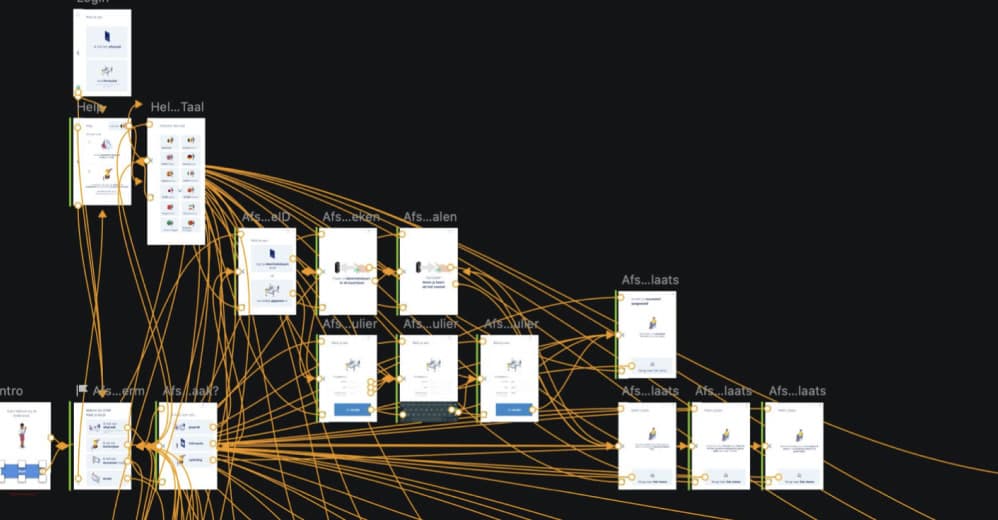
Every way a visit could go, wired into one clickable prototype. Test it with visitors. We tested the prototype on a kiosk with people from varied backgrounds, including non-native speakers and people less used to digital services, watching where they hesitated, guessed or gave up.
Look beyond translation. Language turned out to be the biggest barrier, and translating the screens didn’t remove it: some visitors didn’t speak any of the languages on offer, and some couldn’t read. We explored whether icons and illustrations could carry the meaning instead, and how differently the same symbol can be read across cultures.
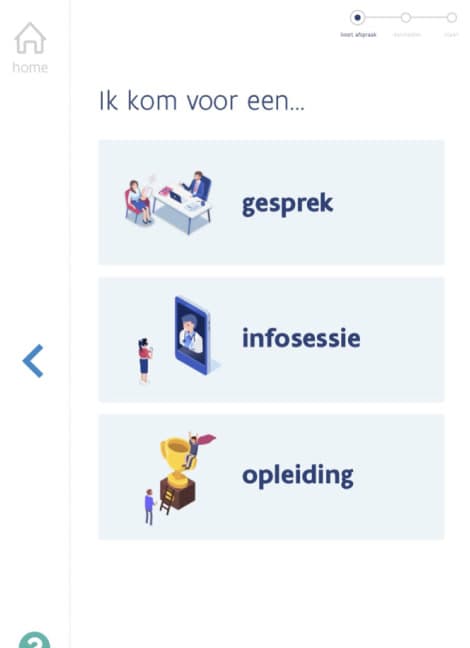
“I’m here for…”: each reason to visit backed by an illustration, not just a word. Weigh it up. Pictures helped, but not enough. Too many visitors couldn’t get through the kiosk on their own, and they were the very people a welcome desk is there for. A kiosk would have put a barrier in front of them, not taken one away.
A clear decision, before anything was built.
Instead of a kiosk that would have left many visitors behind, VDAB got a recommendation, backed by evidence, not to build it, and an understanding of where language and literacy limit self-service, for its future work.