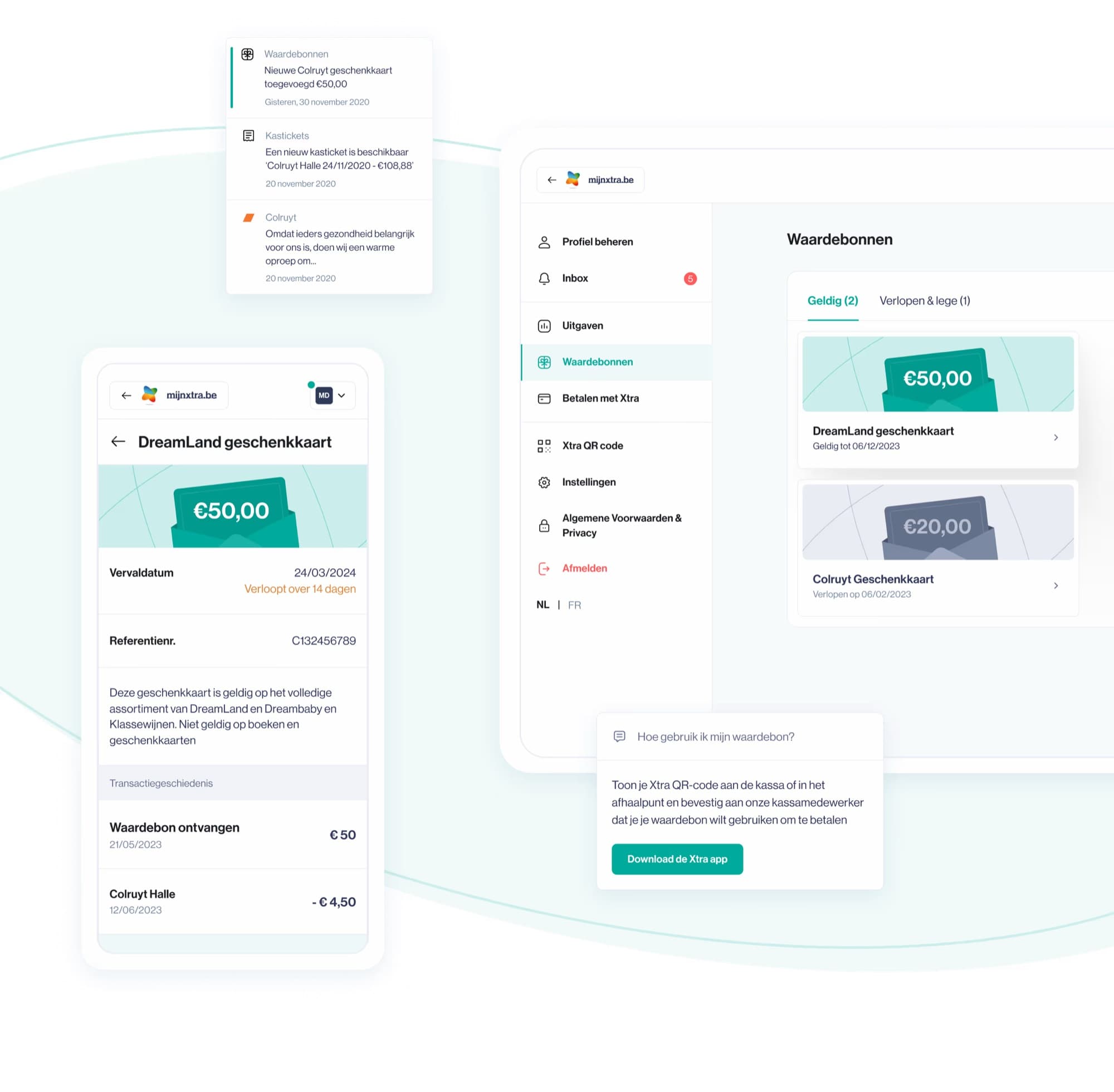
Colruyt Xtra · Case study
Bringing the Colruyt experience into one app.

At In The Pocket, I helped turn two years of discovery into a shared product direction, organised around what customers need before, during, and after a shopping trip.
The challenge
Colruyt Xtra wanted to bring several shopping services together in one app, from lists and promotions to ordering and pickup.
Each service had its own team, roadmap, and history. Bringing them into a single experience required a shared view of what customers needed and which tasks should take priority.
Colruyt already had two years of discovery behind it. I helped turn those insights into a product direction: an experience that connects the services and responds to what customers are trying to do at each moment.
How we got there
Returning to the customer’s task. We revisited the research through short customer interviews and in-store observation. The focus was on the jobs people came to do and the circumstances surrounding them.
Planning at home, shopping in a store, and collecting an order involve different needs. Looking at these moments helped us understand how individual services could contribute to a broader customer journey.
This gave us a practical basis for deciding what the app should bring forward in each situation.
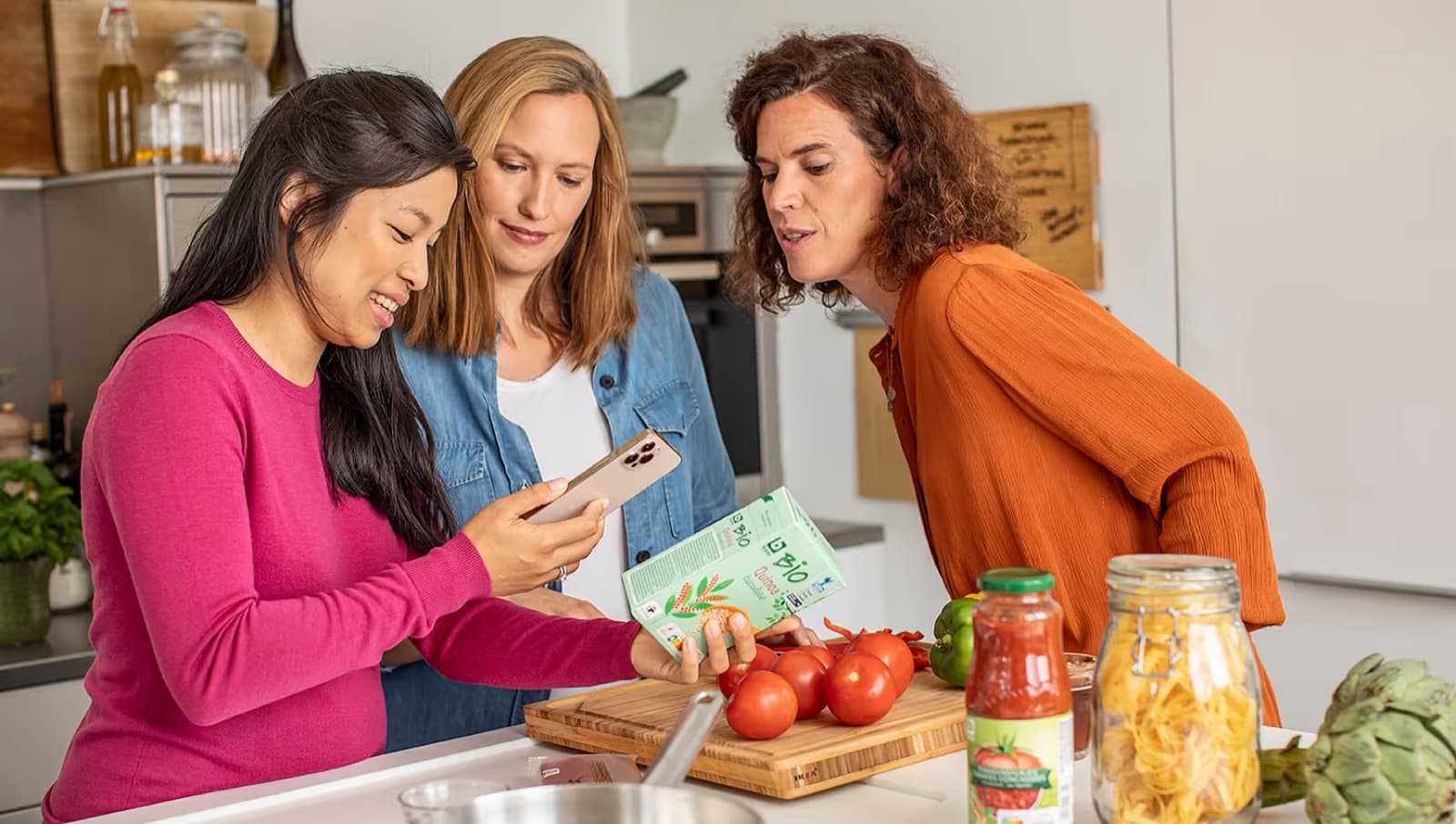
Planning at home: one of the moments the app had to serve. Building shared priorities. The service teams needed a common basis for making decisions about the app. In a series of workshops, we brought the customer tasks together and ranked them collectively.
These discussions helped the teams look across their individual services and agree on a shared set of priorities. They connected the research to concrete choices about what the experience should make easy to find and do.
That shared prioritisation became a foundation for the app’s structure and the product direction.
One app for the group’s brands, with Xtra at the centre. Structuring the experience around shopping moments. We organised the concept around customer tasks, surfacing relevant services according to the situation.
Planning at home. The experience needed to support preparation, bringing together relevant tasks such as making a shopping list, exploring promotions, or placing an order.
Shopping in store. The focus shifted to what customers needed during the visit. The structure aimed to make relevant services accessible within that moment, without requiring customers to understand how Colruyt’s services were organised internally.
Collecting an order. Pickup introduced another set of priorities. Treating it as a distinct moment helped us consider what customers needed to complete that part of their journey.
Across these situations, the goal was a coherent experience that could accommodate the group’s services while keeping the customer’s immediate task clear.
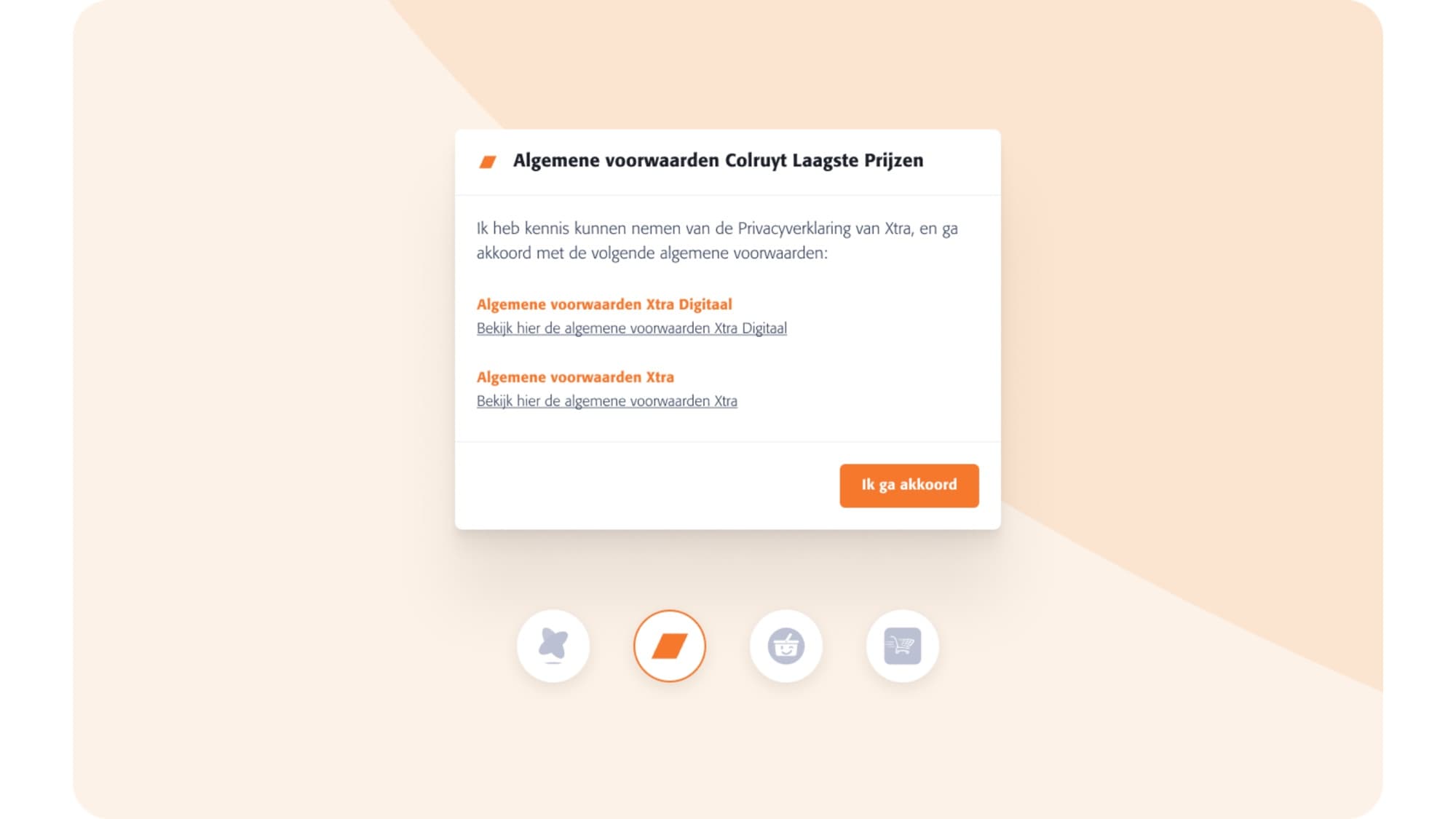
One app in each brand’s colours: the same screen as Colruyt, with a switcher for the others. Testing the structure with customers. We tested clickable prototypes with customers throughout the work. This allowed us to explore the proposed structure and use customer feedback to inform decisions.
The prototypes also gave the service teams something concrete to discuss. Instead of evaluating an abstract app architecture, they could see how services came together in a customer journey.
Testing helped connect research, team priorities, and interface decisions as the concept developed.
A foundation for the product roadmap.
The result was an app concept built around customer tasks and the moments in which they happen. It brought the services into a shared experience and became the foundation for the product roadmap.
The central contribution was turning a substantial body of discovery into a direction teams could act on: a shared set of priorities, a structure for the experience, and a concept tested with customers.