TP Vision Philips · Case study
Turning a platform strategy into reasons to switch.
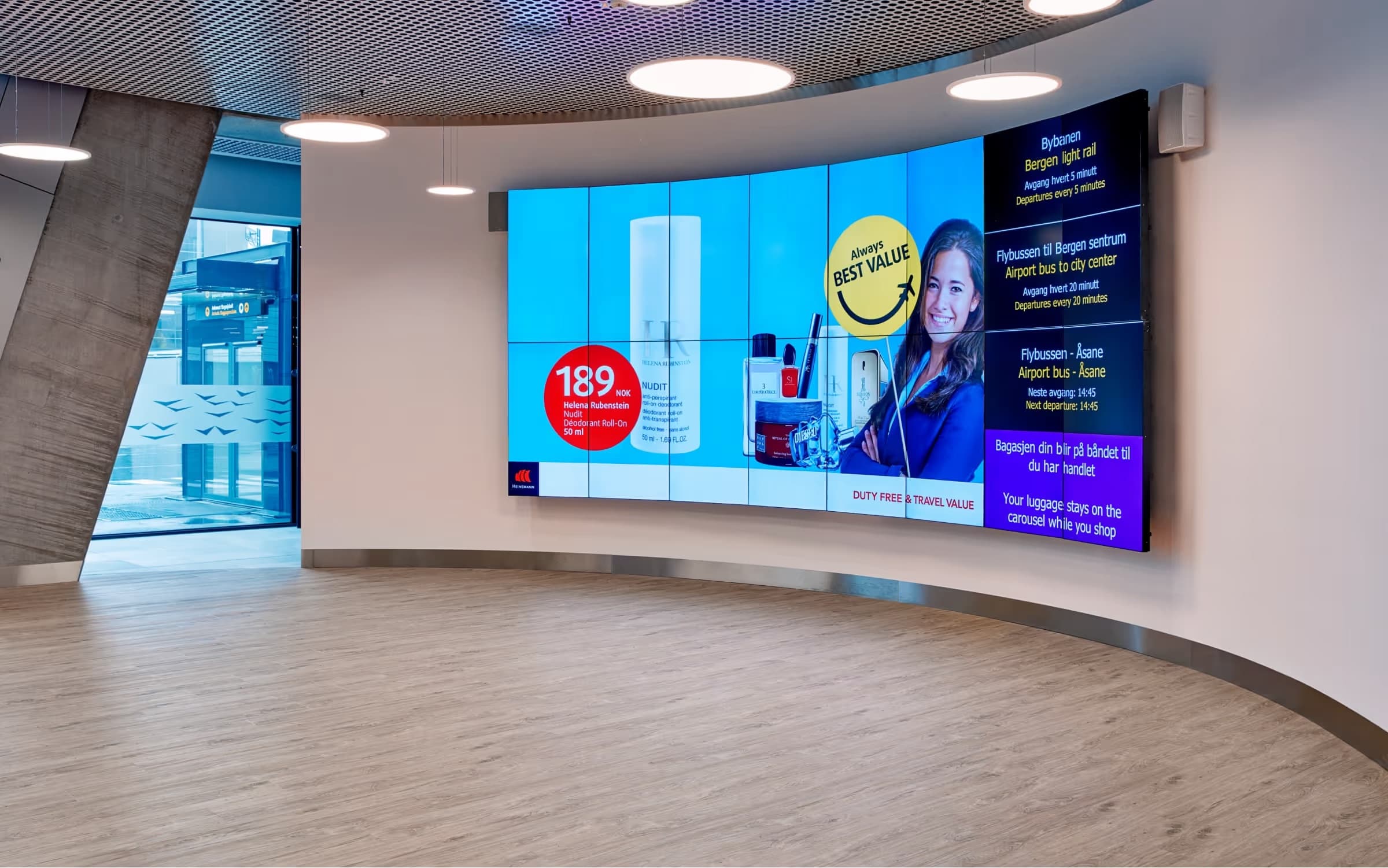
TP Vision was developing a platform to replace solutions its customers had built themselves. At In The Pocket, I helped turn the strategy behind it into a product experience, shaped around clear reasons to switch.
Every workflow had to make the case for switching.
WAVE was meant for professionals who already had tools they knew and trusted.
Explaining the strategy wouldn’t change their habits. The product itself had to give them a reason to reconsider.
How we got there
Study current workflows. We spent time with the people who would use WAVE, learning their workflows, shortcuts and frustrations with their current tools.
Translate the strategy. Each strategic promise was turned into concrete workflows, so the vision showed up in what the tool does, not in what it claims.
The platform at a glance: one API connecting the portal, the display agent, the database and partners’ software. Design for experts. The interface was built for speed and depth: dense where experts need it, calm where they don’t, and consistent throughout.
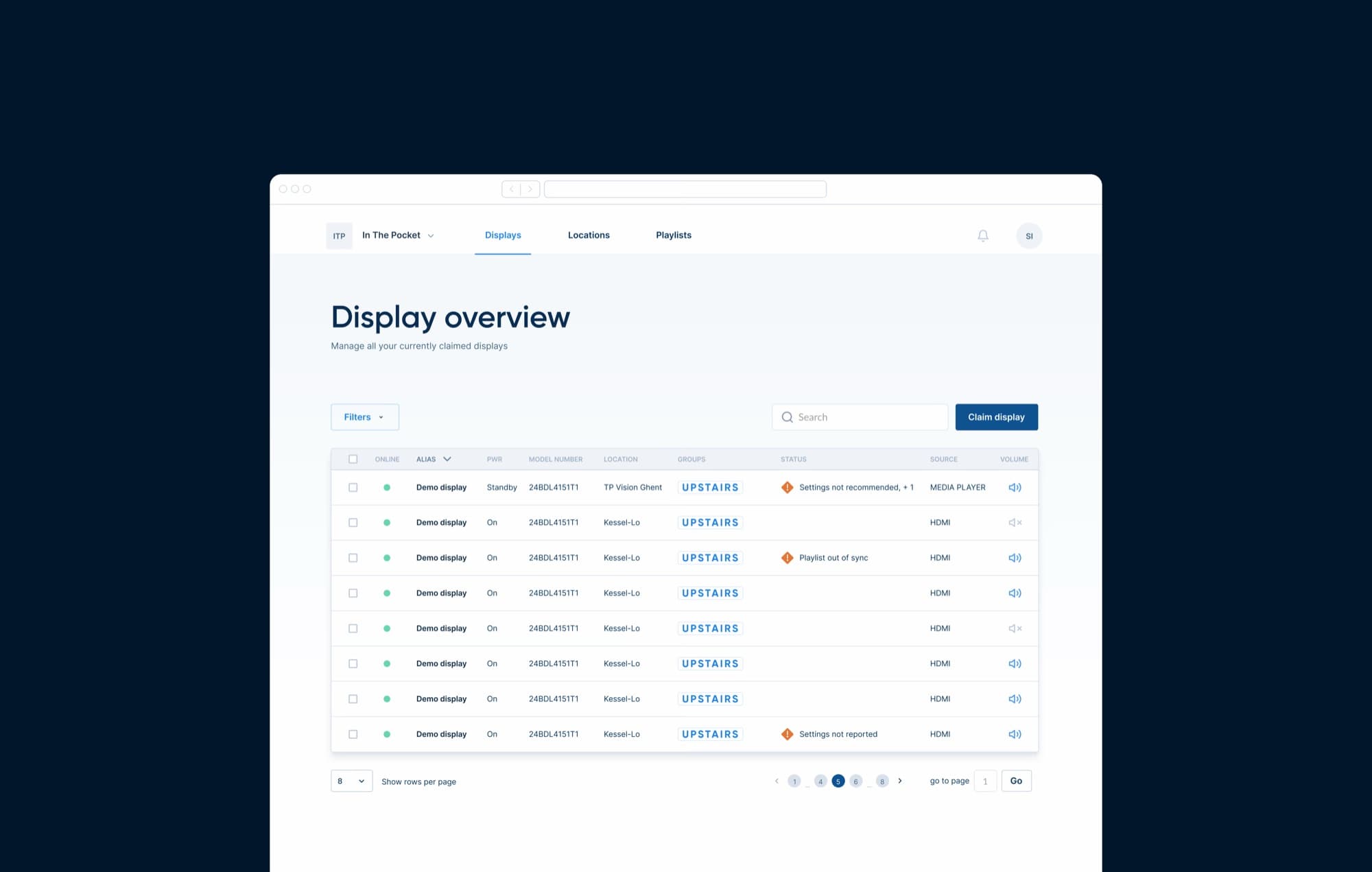
Dense where experts need it: every display’s power, status, source and volume in one table. Work with engineering. We worked closely with the engineers to keep the design intact through implementation.
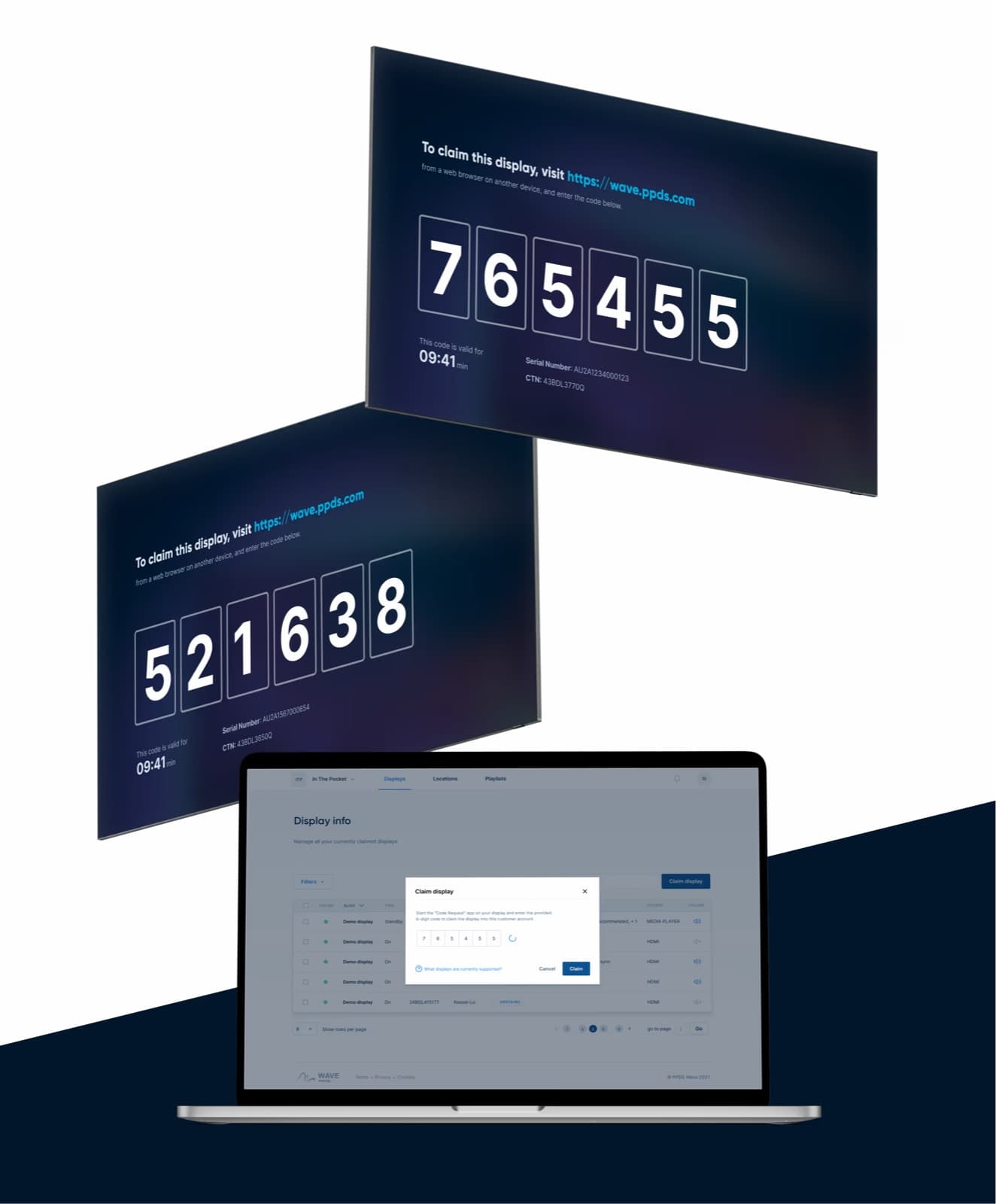
Adding a display takes a six-digit code: shown on the screen, entered in the portal.
From a three-month MVP to the platform behind Philips’ displays.
In The Pocket delivered an end-to-end MVP in three months. PPDS unveiled WAVE at ISE 2022, included out of the box with its Philips signage displays, and took it live at ISE 2023 with a free tier, a paid tier for larger fleets and a marketplace for partner apps.