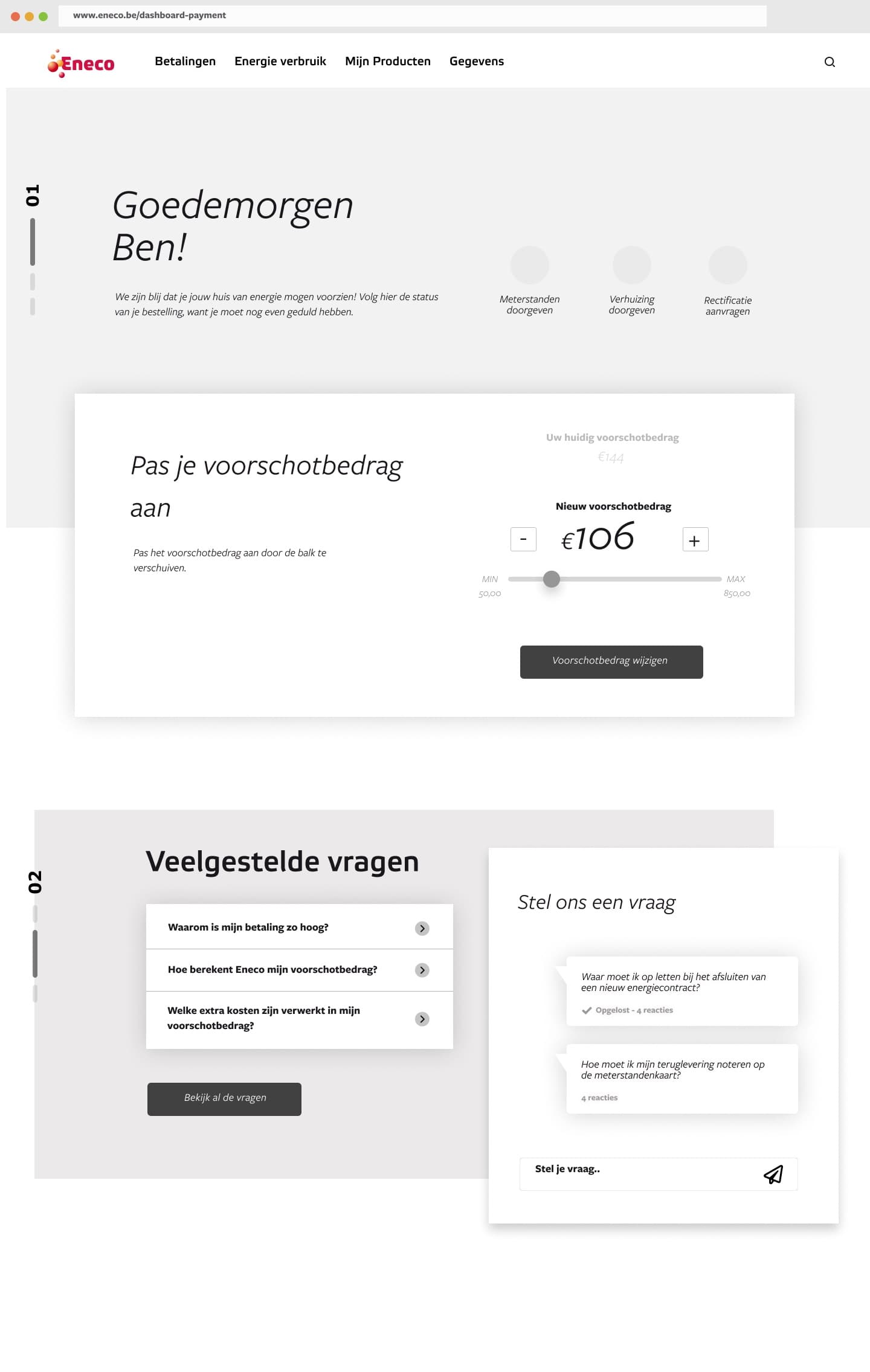
Eneco · Case study
Putting customers in control of their energy.
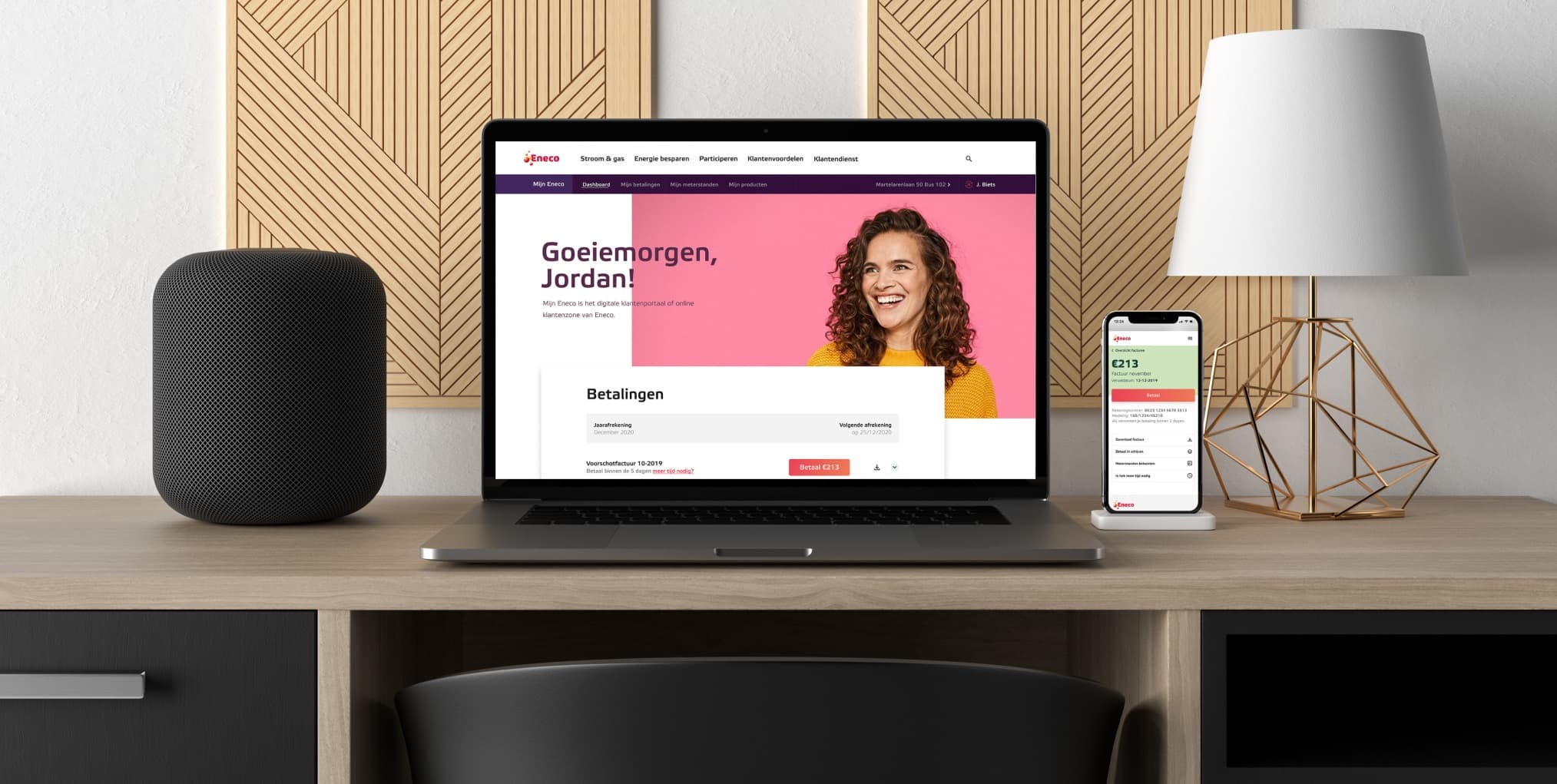
Eneco’s customers kept calling about their invoices and payments. As Senior Product Designer at In The Pocket, I helped make those everyday tasks easy to do online, with a reported reduction of up to 54% in calls about invoice corrections.
Self-service had to be useful enough to replace a phone call.
Eneco’s customer service team was overwhelmed. Customers called to understand invoices, check outstanding balances, adjust monthly payments and request corrections: recurring needs the digital experience could help them resolve.
Customers needed to manage their accounts online with confidence. Within In The Pocket’s team, I worked alongside product design, strategy and client partnership colleagues to turn those needs into a clearer customer portal.
How we got there
Understand why customers called. Stakeholder interviews separated the portal’s essential tasks, like payments and account management, from supporting features. The contact data showed where to start: 42% of calls about advance invoices were to change the monthly payment, and a third of those about settlement invoices asked for a correction.
Give every task a place. A UX audit and an affinity map of what we’d learned led to a new information architecture, with a clear place for invoices, products, personal details, questions and moving house.
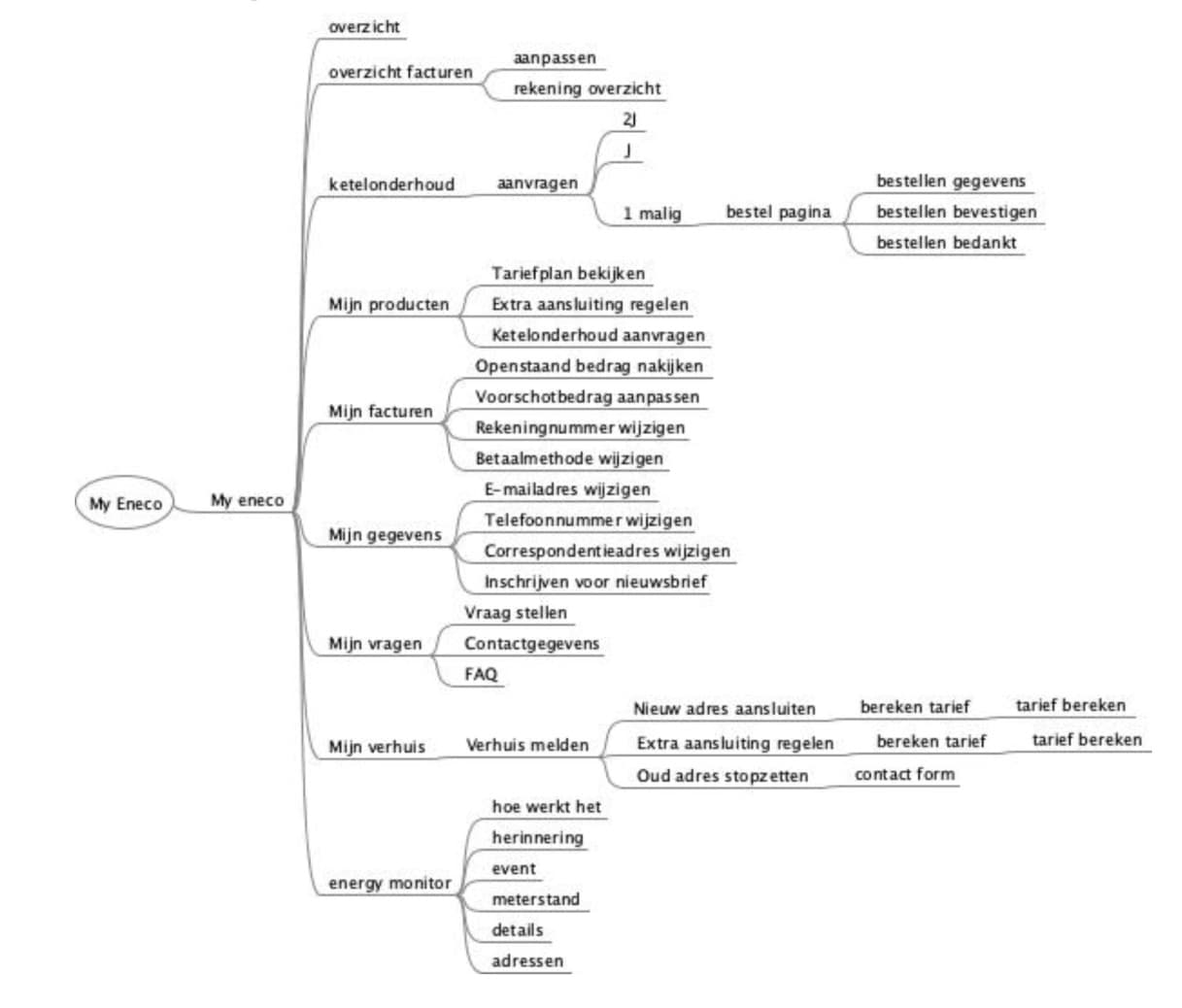
Every task in its place: the portal’s new information architecture. Put the next step first. The dashboard was built around a personal greeting, actions that change with the customer’s situation, one primary focus and help in context, right where questions come up.
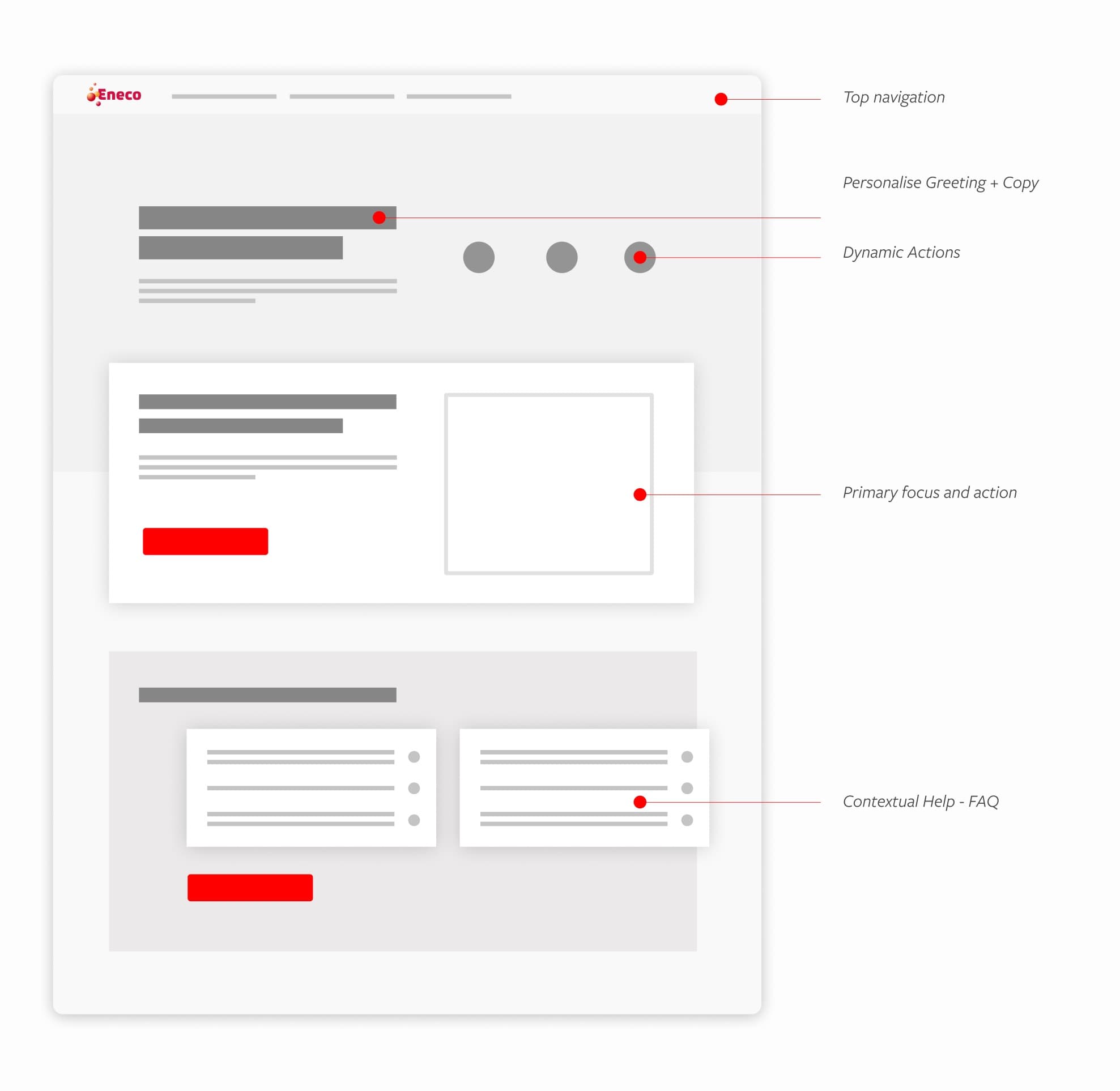
The dashboard’s structure: a greeting, the actions that matter now, one primary focus and help in context. Test with customers. We ran usability reviews with five Eneco customers, an hour each, covering the key flows and their general questions. What we learned went straight into the design, or shaped the decisions that followed.
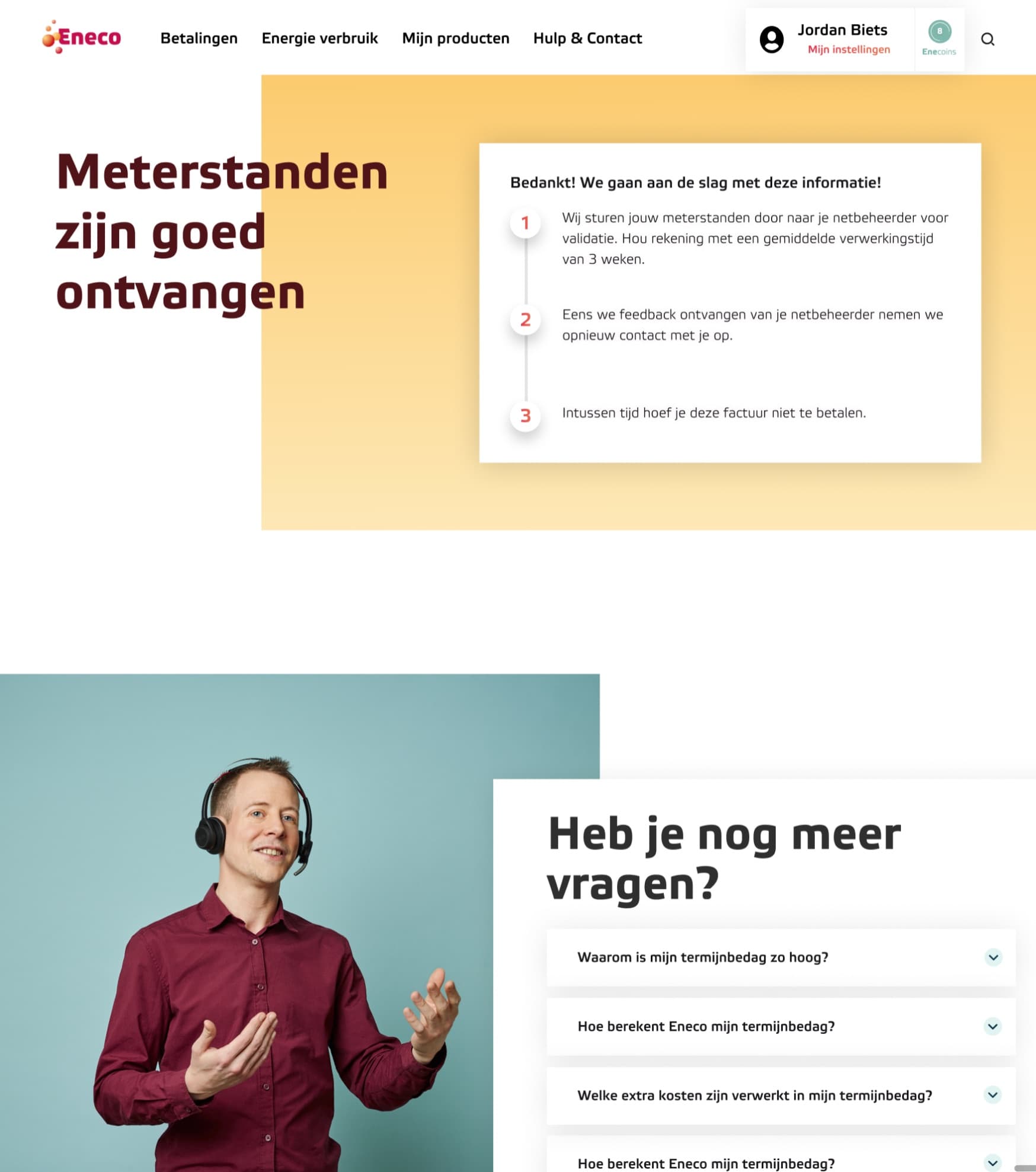
Closing the loop: once meter readings are in, the portal sets out the three steps that follow.
Customers more inclined to help themselves online.
Customers became more inclined to use self-service, with a reported reduction of up to 54% in calls about invoice corrections. Monthly usability tracks then kept filling the backlog with improvements.